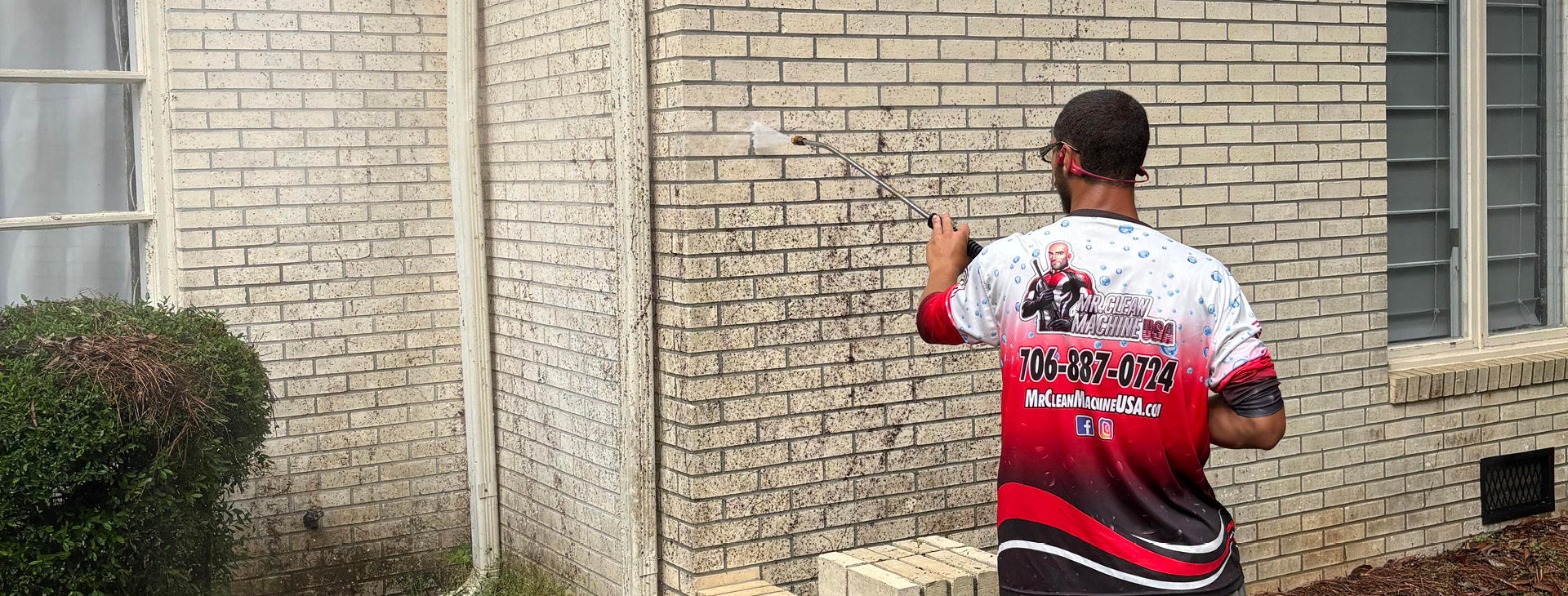
Yes — power washing can effectively remove mold from building exteriors, but the key to lasting results is using the right method for each surface.
Mold, mildew, and algae are common problems on both commercial buildings and homes. These organisms thrive in damp, shaded environments and often appear as dark streaks or green patches on siding, brick, concrete, and other exterior surfaces. At Mr. Clean Machine USA, we remove exterior mold safely across the CSRA — Augusta, Evans, Martinez, Grovetown, North Augusta, and Aiken — using a customized combination of soft washing and pressure washing that eliminates mold at the source, not just on the surface.
Key takeaways
- Power washing can remove mold, but high pressure alone often leaves the spores behind — so it grows back faster.
- Soft washing (~300 psi) with specialized cleaning agents kills mold, mildew, and algae on siding, vertical surfaces, and roofs.
- Pressure washing (3,500+ psi) is used for concrete, with cleaning agents added for grease or red-mud stains.
- Too much pressure can damage siding, paint, and mortar — historic, stucco, and sun-oxidized surfaces need extra care.
- Every job is customized to the property, which is why professional mold removal outlasts DIY power washing.
Can Power Washing Really Remove Mold?
Power washing removes mold effectively when the method matches the surface — the pressure level and cleaning agents matter far more than raw force.
Many people assume that simply blasting mold away with high pressure will solve the problem. In reality, high-pressure washing on its own may remove the surface appearance of mold while leaving the underlying spores alive. That’s why the professional approach pairs the right pressure with cleaning agents designed to kill mold, so it doesn’t return within weeks.
Soft Washing vs. Pressure Washing: Which One Removes Mold?
Soft washing kills mold on siding and roofs with low pressure and cleaning agents, while pressure washing removes buildup from tough concrete surfaces — most properties need a mix of both.
We use two complementary methods and customize the solution to every property:
| Soft Washing | Pressure Washing |
Pressure | ~300 psi (low pressure) | 3,500+ psi (high pressure) |
Best for | Siding, most vertical surfaces, and roofs | Concrete — driveways, sidewalks, and patios |
Cleaning agents | Yes — specialized solutions that kill mold, mildew, and algae | Added when needed to lift grease or red-mud stains |
Main goal | Kill organisms at the source so they don’t return quickly | Remove built-up grime and staining from hard surfaces |
Most vertical surfaces and roofs are best cleaned with a soft wash that uses specialized cleaning agents. Concrete typically calls for a pressure wash — and even then we add cleaning agents to combat grease or red-mud stains. Because no two properties are alike, every solution is tailored to the specific surfaces and staining involved.
Why Mold Forms on Building Exteriors
Exterior mold growth is especially common in the Southeast, where humid summers, wet springs, and shaded surfaces create the damp conditions mold needs to spread.
Common causes of exterior mold growth include:
- Moisture buildup from rain or humidity
- Shaded areas that stay damp longer
- Organic debris such as pollen and dirt
- Poor drainage or water-runoff patterns
Over time, these conditions let mold and mildew attach to building surfaces and spread across siding, brick, and concrete.
Why High Pressure Alone Isn’t Enough — and Can Cause Damage
Excessive pressure can strip paint and damage siding, stucco, and mortar, while still failing to kill the mold spores underneath.
Beyond leaving spores behind, too much pressure can harm delicate surfaces. We take extra care with historic homes, stucco exteriors, and homes with a “very hot” side where paint has oxidized in the sun. Matching the method to the material protects your property while still getting it truly clean.
The Professional Approach to Safe Mold Removal
Professional cleaning combines pressure washing and soft washing with specialized cleaning agents designed to eliminate mold safely and keep it from coming back.
Rather than relying on force alone, our crew selects the right pressure and cleaning solution for each surface — soft washing where organisms need to be killed at the root, pressure washing where hardened grime and stains need to be lifted from concrete. The result is a cleaner exterior that stays mold-free longer, achieved without risking damage to your siding, roof, or masonry.
Frequently Asked Questions About Mold Removal
Does power washing kill mold or just remove it?
On its own, high-pressure washing usually removes only the surface mold and leaves the spores behind, so it grows back. To actually kill mold, professionals pair the right pressure with specialized cleaning agents.
What’s the difference between soft washing and pressure washing?
Soft washing uses low pressure (around 300 psi) with cleaning agents to kill mold, mildew, and algae on siding, vertical surfaces, and roofs. Pressure washing uses high pressure (3,500+ psi) to clean tough concrete surfaces like driveways and patios.
Will pressure washing damage my siding or paint?
It can if the pressure is too high for the surface. Excessive pressure may strip paint or damage siding, stucco, and mortar, which is why delicate, historic, and sun-oxidized surfaces are cleaned with lower-pressure soft washing instead.
How do I keep mold from coming back after cleaning?
Killing the spores at the source with the right cleaning agents is what keeps mold away longer. Reducing moisture, trimming back shade, and clearing organic debris like pollen and dirt also slow regrowth.
Why is exterior mold so common in the Augusta area?
The Southeast’s humid summers, wet springs, and shaded surfaces create the damp conditions mold, mildew, and algae need to grow, making exterior mold a frequent issue for homes and commercial buildings across the CSRA.
Can you remove red-mud and grease stains from concrete?
Yes. Concrete is typically pressure washed, and we add specialized cleaning agents to help lift grease and red-mud staining that plain water pressure can’t remove on its own.
Get Rid of Exterior Mold — the Right Way
Whether it’s dark streaks on your siding or stains on your concrete, our team will match the right method to every surface and remove mold safely. Request a free, no-obligation quote or call us today at 706-887-0724.
